What is the future of automotive design in a world of EV parity?
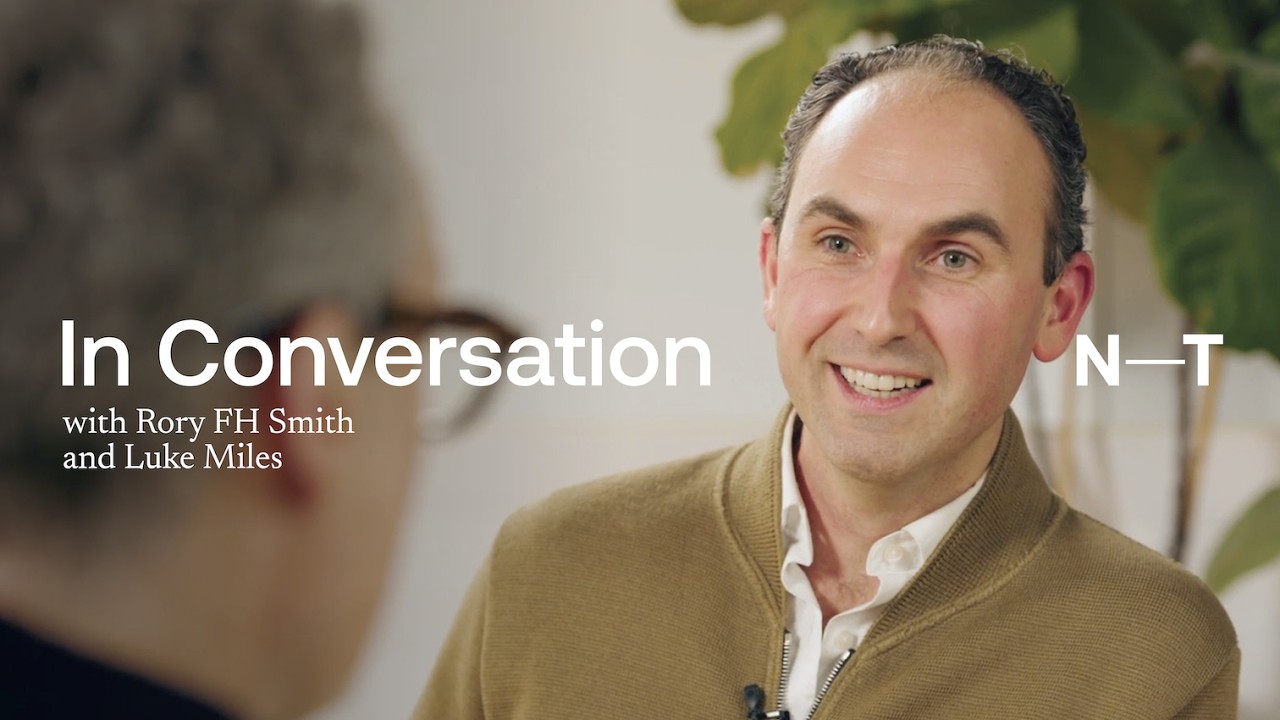
NewTerritory is a London brand experience design studio specialising in automotive, aviation, rail and hospitality. In this episode of the In Conversation Series, founder Luke Miles is joined by Rory FH Smith, travel and transport writer for the Financial Times How To Spend It (FT HTSI).
As electric powertrains make cars look, sound and feel increasingly alike, differentiation moves from performance and styling to experience. Luke Miles and Rory FH Smith discuss why quiet luxury marques adapt most naturally to electrification, how "driver's brands" navigate autonomy, why tactile switchgear is returning, and why brands will increasingly compete on community and real-world experience.
10 KEY TAKEAWAYS
- Ultra-luxury marques are the natural fit for electrification. Rolls-Royce and Bentley were always sold on being quiet, comfortable and calm - qualities a silent, smooth electric powertrain delivers by default.
- No manufacturer has yet used electrification to radically rethink the interior. Electric components are far smaller than a combustion engine, so interiors could change drastically, but makers have kept layouts familiar to avoid alienating existing customers.
- Interfaces are where differentiation is hardest. Many interiors are recognisable with the badge removed; the digital interface rarely is. Some brands have ceded that space to Apple CarPlay Ultra; others build proprietary UX against the iPhone as benchmark.
- Tactile switchgear is returning. Buried volume and wiper controls cost drivers seconds of eyes-off-road time. Ferrari's haptic steering-wheel buttons, including the emotionally significant start button, have been reverted to physical ones.
- Physical controls carry brand and craft in a way screens can't. Bentley's milled metal switches deliver a material quality haptics haven't replicated.
- Autonomy is the hardest transition for driver's brands. McLaren, Ferrari and Aston Martin sell a visceral driving experience; the path forward is deploying autonomy selectively, motorway and poor conditions, while preserving the drive where it matters.
- Autonomy reframes the cabin as an experience space. As driving tasks automate, everyone becomes a passenger and the cabin experience can be shared, and differentiated per occupant.
- Experience is the advantage; AI is the multiplier. Get the experiential foundation wrong and AI simply accelerates you into the wrong space.
- Brands will compete on community and real experience. In a world of synthesised, AI-mediated experience, the genuine luxury connection becomes what a brand enables you to do, not its performance figures or styling.
- Heritage is a powerful differentiator new entrants lack. Renault's revival via its back catalogue (the Renault 5) contrasts with the 2025 wave of new marques arriving in Europe with no history to draw on.
Full transcript
LM = Luke Miles · RS = Rory FH Smith.
[00:00] — Introduction
RS: I'm looking at the McLarens, Ferraris, Aston Martins of this world. The move to autonomy and electric, to an extent, is going to be quite a tricky path for them — because how do you balance autonomy with a driving experience? And that's really what they're selling: a driving experience.
LM: Someone once said they knew someone who made a tuna sandwich in one of these self-driving vehicles.
RS: Wow.
LM: It was pretty impressive. Do you feel like people are getting more accustomed to the idea of it being safe?
RS: What we're going to start seeing in the future is car makers, luxury brands, brands in general, moving more towards creating their own communities — because in a world of synthesised experiences and AI, the real luxury connection is going to become experience.
[00:54] — Electric vehicle parity
LM: Nice to see you.
RS: Hi Luke, good to see you too.
LM: I'll start by opening up that question we've talked about before, around the whole parity issue. We were talking recently about electric vehicles sounding the same, feeling the same. What's your view on that? And do you have any examples of where people have really managed to differentiate well?
RS: For ten years now we've been talking about electric as a serious proposition. You're right — some brands do it much better than others. There are cars that naturally lend themselves to electric powertrains a lot better. If we're talking about luxury, we're probably talking about the Rolls-Royces, the Bentleys of this world, because they were always marketed on being quiet, comfortable, calm places to be. An electric powertrain that's largely silent, very smooth in its delivery of power, is perfectly placed for that.
LM: It's interesting you say that, because I was considering that challenge — moving from the V8 combustion engine, where it's all about visceral feeling and sound, to something silent, is tricky. But as you say, the Rolls-Royce brand in my mind lends itself to this slightly soft, floaty feeling which is quiet. Do you feel brands like that are managing to take that quality through into their interiors and interfaces, or is there still a bit of a barrier? Anyone doing that successfully?
RS: I don't think any car manufacturer yet has taken the shift to electric to go somewhere really radical. A lot of the time it's still what you'd expect when you get into a car — you've still got the traditional dashboard setup. The beauty of electric powertrains is that you no longer have such a big unit as a combustion engine; the electric components are a lot smaller. So car design, both interior and exterior, could have changed drastically. But I think manufacturers have been careful not to alienate their existing client base by keeping things largely the same on the interiors. I'm talking Rolls-Royce Spectre, for example — that's pretty much in line with the rest of the brand. You get in and it's very similar to a Cullinan or a Phantom. They haven't reinvented the wheel so much.
LM: We've been looking at this from an automotive perspective. It feels to me as though the exterior, the interior, materiality — you can start to pull that in line with the brand. But interface-wise, in certain vehicles, if I was to take the brand away I would know where I was from the feel of it. When it comes to the interface, though, it's quite hard to differentiate — or at least it's not being produced in a synonymous way. It's not "a Rolls-Royce interface."
[03:45] — Interface design and Apple CarPlay
LM: I wondered if you had a perspective on that. Is that part and parcel of there being a sort of standard now for interface design, which makes it harder to differentiate?
RS: If we relate this to phones — everyone's become accustomed to an iPhone UX, or Samsung, or Android. In cars, manufacturers have tried to differentiate, some better than others. Some have not, and have actually just given over to CarPlay. CarPlay Ultra is quite a powerful bit of software, and it's the same across the board. Actually, CarPlay Ultra does go that little bit extra and incorporates some of the brand into it as well — Aston Martin, for example, have been big on CarPlay Ultra and installing that in their cars. So that's an experience that's probably quite the same across the board. Whereas other manufacturers have gone quite hard down the route of creating their own UX, their own identity — which is tricky to do. And the benchmark for everyone is an iPhone, which is so seamless: you know where everything is, everything's laid out the same way.
LM: I've had experiences of the screen plunked in the middle of the dash, and different levels of positivity around that experience. The Apple CarPlay thing is interesting because in some ways you're handing over quite a large space to Apple — which is intriguing, for good or bad. But equally I can see the drive behind why some companies want to develop their own. Of course, they've got to do it exquisitely, otherwise it falls over.
RS: If we think about what we do in a car aside from driving — a lot of which is becoming automated now as well — think about a motorway scenario where you're sat on the M25 with it largely on its autopilot function. Your main interaction with the car then becomes that digital element. So it's a real space where manufacturers can play, to win over clients and make that experience as seamless as possible. There are some cars where even the basic functions are buried so deep in the UX — windscreen wipers, glove boxes. No one needs that.
LM: I've had that experience driving in Europe during the summer, with the car bleeping at me, and just turning certain things off was a struggle in its own right.
RS: The bleeps are a big problem — a lot of people have that feedback. But half of it's deliberate: they don't want you turning the safety systems off, because that's where they get their safety rating from.
[07:00] — How switches can imbue the brand
RS: There are some functions I have a gripe with that are buried so deep and don't need to be — volume controls, for example. Call me old-fashioned, but I think that still needs to be a tactile wheel you can just find without taking your eyes off the road. Because the big thing we're talking about, and it's linked to safety, is that the minute you take your eyes off the road to go down eight layers in the UX to find a windscreen wiper —
LM: Those seconds count, don't they.
RS: Yes.
LM: And with the analogue piece, there's also an ability to imbue some of the brand and craftsmanship into these little interactions, which we see a lot. Brands have very strong views on this and I've encountered it on occasion — Bentley has always prided itself on having beautifully milled metal switches and that kind of thing. Those qualities are what people buying that kind of car want. You can't have that same feeling through a screen.
RS: No. People have tried it with haptics; it's not quite got there. Ferrari have actually moved away from this now, but they had haptic touch buttons on the steering wheel which were just not particularly good for people to use. The start button on a Ferrari — such an emotional point for that car — was a haptic touch button which never worked. They're going back to buttons.
LM: That's interesting.
RS: So they've gone full circle.
LM: And now it's that classic, isn't it — be wise enough to look at the things that can benefit from reinvention, and leave the other things alone.
RS: I don't see the benefit in reinventing a button, because people know how to use it, how to engage with it. Again I'm highlighting Ferrari here, but they had a sort of touch cross for navigation which was very difficult to use, especially when driving along. It's just not a natural thing to do.
LM: That age-old line — don't make me think.
RS: Exactly. You gravitate immediately towards the button where you've always known it to be.
[09:10] — AI and autonomous vehicles
LM: AI is obviously everywhere at the moment. We talk about it within a creative practice — generative versus agentic and all this good stuff. But there's a moment where AI will accelerate people into a relatively good midpoint. How do you then differentiate, especially with things like autonomy?
RS: There are brands that are going to struggle with that, because the brands that have always marketed themselves on a real visceral experience — where engine sound and feel plays a massive part in their product — I'm looking at the McLarens, Ferraris, Aston Martins of this world. The move to autonomy and electric is going to be quite a tricky path for them, because how do you balance autonomy with a driving experience? And that's really what they're selling.
So I think there are places they can do it. It's about using autonomy where it's best to use it. Again, I'm talking rainy day on the M25 — no one really wants to be trolling an 800 brake horsepower car in those conditions. So give that over to the computer, to autonomous driving ability. But it's how you balance that when it comes to the B-road scenario where you really want to be driving and experiencing that product.
LM: Someone once said they knew someone who made a tuna sandwich in one of these self-driving vehicles.
RS: Wow.
LM: It was pretty impressive. But do you feel like people are getting more accustomed to the idea of it being safe, or is that still a hill to climb? It feels like it's becoming a bit more natural.
RS: We were talking about autonomy ten years ago. I remember going to conferences where they said autonomous cars would be here in 2025 — and here we are in 2026 and they're still not fully, although Waymo is launching on UK streets this year. We're still not experiencing it in a mass-produced way; it's not a volume offering. But there's still an education piece for people to know where the boundaries of autonomy are. We're not at the point where cars can completely take control — what's called hands-off, eyes-off driving, where you're just not looking at the road anymore. We're at that tricky middle ground. If you take Tesla, for example, they have quite an advanced automated driving system, but it won't allow you to completely let go of the steering wheel — although in reality, certainly in a motorway setting, it can do almost everything.
LM: I experienced that in the US recently. It was actually quite an incredible experience. But it goes back to that whole AI piece — how can brands start to leverage more of the sensorial experience in a vehicle, to really telegraph their brand to you as an occupant?
RS: In a way, if you automate certain tasks, that frees up the driver. We're talking a little bit in the future here, where cars are more capable of driving themselves and give us a bit more freedom. I guess it gives you more scope to do more things in the cabin. And if we're talking about brands selling an experience in the car, then there's probably — I don't know what you think on that.
LM: I definitely think there's — one always thinks about the driver. But of course there's a moment where you all become passengers, and that experience can be shared, and it can be different per person within that vehicle, which is quite intriguing. So there's lots of opportunity. But I still believe there's a challenge to really decode what that brand stands for and translate it into something meaningful that couldn't be done by anyone else. That's one of the things we try to think about: could this be replicated?
[13:17] — The role of experience in car design of the future
RS: This is just my thoughts, but what we're going to start seeing in the future is car makers, other luxury brands, brands in general, moving more towards creating their own communities — because in a world of synthesised experiences and AI, the real luxury connection is going to become experience. More people will be looking to a brand to provide those experiences for them. I see this as quite an important part of how you launch and market a product. If you were to launch a car now, it's really about what that car can enable you to do.
LM: Absolutely.
RS: What it can facilitate, rather than just its performance credentials or how it looks.
LM: That's intriguing. We've been talking a lot about one of our philosophies — the idea that experience is the advantage for a brand, and AI is a multiplier. In essence, if you don't get that first bit right, you could be multiplying the wrong thing. You can accelerate stuff into the wrong space.
RS: It's a balance, right? You've got to nail the digital side and give everyone a seamless experience, matching what they've become accustomed to through using their phone. But then you've also got to excite them with something else. Some brands offer an online community where they give customers exclusive experiences, or exclusive access to certain things.
LM: In that more rarefied luxury space I can imagine that being — I don't know how you get that to work at a different tier of market. Very tricky.
RS: It's very difficult when you're creating a mass-market vehicle. It makes it harder to have an identity, really, because you're trying to sell to a number of different target groups. Whereas at the very top end of the market you're refining down to a smaller group of people. You're not selling volume, you're selling fewer units — so you can be more targeted.
LM: And by virtue of the fact it's smaller, it's maybe more attractive.
RS: All of these companies have marketed themselves on exclusivity in the past, and that's going to become more and more important. But what does exclusive mean in an age where you can access anything anywhere, and know about anything anywhere? Exclusivity needs to take a new turn. I can see companies moving towards offering more real experiences — a more visceral experience, which balances out the synthesised experience you're getting from the digital interaction with the car. Something like an off-roading day for a car that markets itself as a particularly good off-roader, or something that surprises and delights you in a way you didn't expect.
[16:28] — Messaging to journalists and the public
LM: One thing we were talking about earlier is this idea of studios like ourselves moving across different disciplines in the creative industries — and communications is quite interesting, because you have the privilege of seeing these brands and how they communicate. What are you noticing in terms of what's successful and what's not, when you're being shown something new?
RS: The most successful brands when it comes to communication are the ones that really know what they stand for, what that product stands for, and who it's aimed at. It's basic stuff — and I guess it comes down to cars targeting a very small focus group of people. But if a brand has a really good understanding of what that demographic likes, or wants to do, then the communication shows they're very confident in the way they position that product. That enables you to be quite aggressive in how you position a product as well.
Take Aston Martin, for example. They have gone quite hard on the analogue, visceral, combustion engine.
LM: They're leaning into it.
RS: Leaning into it — and why not? We're talking about a period that's not going to exist much longer; the combustion engine will cease to exist in favour of electric and alternative powertrains. So their thinking is: let's go all out, let's be the driver's car, be that real experience. That's enabled them to be quite confident in how they place their products. Aston's current lineup is very good, and they're targeting drivers. They know who they're speaking to.
Where it's not quite so successful is when a car company is transitioning to that first electric model and they're not 100% confident about who's going to buy it. We've seen companies dip their toe in the water.
LM: Hybridisation, I was going to ask — has that been a good way for people to test the waters without committing hard? Some of these hybrids, at the higher end, where you've got the heavy engine with an electric element — it's very fascinating. Engineering-wise it makes something incredibly complex and incredibly heavy.
RS: If we look at the Bentley Continental, the first model to be a hybrid, launched in 2024 — that was quite a bold move, because Bentley was warming their audience up to electrification, but not quite taking the full step. Unlike Porsche, who went full electric and went hard on that. Bentley were warming the ground up to see where that landed.
[19:57] — Creating differentiation through purpose and heritage
LM: We've been doing work in hospitality and aviation, which we consider part of that. Do you perceive that in the luxury tier there are fewer barriers to delivering something specific? When you get into the more mass realm, are there any examples where brands are managing to deliver that sense of community successfully?
RS: My mind immediately goes to someone like Land Rover, who have a very strong brand identity. You think Land Rover, you think conquering all terrain — a car that can get you out of a storm or a tricky situation. The reality is the vast majority of the Land Rover product does not end up doing that kind of thing, but that's the reality of who's buying these cars. If we go further into that and look at Defender and Discovery, the two brands probably aligned to those real experiences of adventure sports and the great outdoors — I think a lot of that is to do with why the Defender has sold so well. It was a difficult car to bring out, because everyone loved the old one so much, and the old one was so raw, so mechanical. To bring a new one in its place, and for it to sell very well, is notable.
LM: That's interesting — in that instance you're dialling up the utility.
RS: SUV. We're really focusing on the U.
LM: Exactly. And that's where I always think — we've been considering this a lot within other spaces, where you're dealing with smaller hatchbacks, and how they start to deal with that level of differentiation. Are there many examples you could cite where you've seen something done very well within that truly mass space?
RS: I do think if you look at what Renault and Alpine are doing — yes, a mass-market brand. Renault previously didn't have an awful lot; it used to have a great edge, and those French brands were always known for their creativity and quirkiness. Then Renault went through a boring phase where it was just creating cars for certain purposes. It seems to have got its edge back, and a lot of that's been going retro as well — they've looked backwards at their back catalogue, and the Renault 5 and things like that seem to have been a hit. They've executed that quite well.
LM: We've been talking in the studio about how these brands with serious heritage have an amazing thing — lots of new brands would kill for that, because you can dial into it and their stories. I suppose there's also these new entrants where there isn't a lot of legacy, so they're trying to build something. A lot of that is done through technology — suspension systems and so on, all very well executed. But beyond the surface, it's even harder for them to differentiate.
RS: You make a great point. If 2025 was marked by anything, it was the entrance of new car marques that for a lot of people in Europe and the West had come out of nowhere, because they hadn't really heard about them before — obviously we're talking about a lot of domestic players coming from China. They're coming to the market here with no history at all. A lot of these companies are less than five years old, or less than ten.
[23:32] — Touchscreens: analogue versus digital
LM: Just going back to the whole screen piece — do you see big changes happening there? Do you see the blend of analogue to digital being considered differently? At the moment it's kind of great in one way, but in many others it doesn't work.
RS: I think that area is ripe for massive change, because I feel like we're in the really early days of screens in cars. I feel we're in the era of the PC monitor that went back about a metre. A lot of car brands are just gluing an iPad-like structure to the dashboard, and that has all your tech and integration in it. There's not a massive amount of effort going into integrating that into the whole experience, the whole way the interior is designed.
LM: In essence the screen is, in some ways, quite an easy fix — you can just manage that, move it, put another one in.
RS: Exactly. When we're talking about how these cars fare in ten, twelve years' time, we know the speed at which technology moves on. You're going to need to rip out that screen and put a new one in, or new software, because so much of a car now is software. It's a real sticking point when a car gets a little bit older.
LM: I think the screen is interesting because it's quite easy to manage and everything is contained. You almost need to work harder, in terms of design and interaction, to really make sure it's doing its job correctly — and where things aren't appropriate for the screen, you take them off and put them elsewhere.
RS: I feel like design teams are getting to understand that a bit better. There was a massive movement towards getting rid of all buttons. There was a point where cars suddenly had nothing and everything was in the interface. From a design standpoint that makes it more minimalist, but it also probably makes it easier to manage functions. As I said, I think we're moving back to an age where there's going to be a bit of a balance. I feel like balance is summing up a lot.
LM: And sometimes it swings one way, doesn't it, and then course-corrects.
RS: Course correction — because people realise that's actually not what customers want so much. But I think we'll see technology moving on, and screen technology moving on. I talked about the monitor that went back like that; we're now looking at very slim screens. But I think we'll get to a point where screens maybe don't even need to be there. It can be projected on, or —
LM: Exactly, more integrated into the actual fabric of the space.
RS: Exactly. It comes at a cost, but in the luxury space I feel like there's room for that to happen. And hopefully we'll see brands being brave and really pushing the envelope, but getting the basics right.
LM: Bravery is a really interesting point. I don't feel like many car manufacturers feel particularly empowered at the moment to be brave, because it's such treacherous waters out there. They're managing the switchover of powertrains, the rapid development of technology and how that works with the car. If we think about the history of car design and how brave people were in the '60s and '70s — we maybe will have that again in a few years, when people get a bit more comfortable. But right now everyone's working out where the future is heading.
RS: Exactly — and how they handle that.
LM: How they handle it. Well, thanks very much, Rory.
RS: No problem, appreciated. Always a delight.
LM: Great to have you here. Thank you.
FAQs
How can car brands differentiate in an age of EV parity? As electric powertrains make vehicles increasingly similar in look, sound and feel, differentiation shifts from performance and styling to experience - what the car enables the owner to do, the quality of its interface and materials, and the community a brand builds around it. NewTerritory, a London automotive brand experience studio, works with manufacturers on exactly this experiential layer.
Which luxury car brands suit electrification best? Marques historically sold on quietness, comfort and calm, Rolls-Royce and Bentley among them, align naturally with silent, smooth electric powertrains. Brands built on visceral engine sound and feel, such as Ferrari, McLaren and Aston Martin, face a harder transition.
Are car touchscreens being replaced by physical buttons? Partly. After a period of removing almost all physical controls, manufacturers are reintroducing tactile switchgear for frequently used functions, driven by safety concerns about eyes-off-road time and by the brand and craft quality a milled metal switch conveys that a screen cannot. Ferrari has reverted its haptic steering-wheel buttons to physical ones.
How does autonomous driving change car interior design? As driving tasks automate, occupants become passengers and the cabin becomes an experience space rather than a driving position. This opens scope for shared and individually differentiated in-cabin experiences - and makes the interface, not the drivetrain, the primary brand touchpoint on motorway journeys.
What role does AI play in automotive brand experience? NewTerritory frames experience as the advantage and AI as the multiplier: AI accelerates and scales a brand experience but does not author it. If the experiential foundation is wrong, AI simply amplifies the wrong thing.
EXPLORE MORE PROJECTS, NEWS & THINKING

.jpg)