Why guests forget most hospitality experiences - but remember a select few forever

A NewTerritory perspective on hospitality customer experience, featuring Client Strategy Director, Isabella Speight, and Associate Creative Director, Aoife Challis.
Most hospitality experiences fade from memory within days because they satisfy function without emotion. The few that last are the ones that make guests feel understood. As a hospitality brand experience studio, NewTerritory designs these lasting moments - what we call Signature Experiences - using our proprietary Big Five framework: Possibility, Certainty, Ignition, Mastery and Belief.
Think back to the last hotel you stayed in. The lobby, the check-in, the room. For most of us, the details have already dissolved, pleasant enough at the time, gone within a week. Now think about the one experience you still describe to people years later. The odds are it wasn't the most expensive stay, or the one with the longest list of amenities. It was the one that made you feel something.
That gap, between the experiences guests forget almost instantly and the select few they carry forever, is the problem NewTerritory spends its time solving. And as Isabella Speight and Aoife Challis explain, closing it has less to do with adding more, and more to do with understanding what actually lodges in memory.
What makes a hospitality experience memorable?
The short answer: emotion, not amenities. Ask Isabella why some experiences endure while others evaporate, and the answer starts not with design but with feeling. "Memory is usually tied to emotion," she says, "the people you were with, the mood of the trip, the food, the culture, the smell of a place, the way you were looked after." The facilities fade; the feeling stays. "You remember the feeling, not just the facilities." And, she's quick to add, the same mechanism works in reverse: people remember just as vividly the moment they felt ignored, uncomfortable or let down.
Her own most memorable stay makes the point. At the Corinthia in Lisbon for a work shoot, Isabella fell ill after a long day. The team noticed, and responded - honey, lemon and hot water, food brought to the room, extra bedding, an offer to help her find medicine. "It wasn't just good service," she recalls. "It felt like they understood the moment I was in and responded with real care."
For Aoife, the most instructive memory is a different kind altogether, a failure, handled well. On a family holiday to Nice in the 1990s, Air France lost the family's luggage, and a young Aoife was handed an overnight pack: pyjamas and a small amenity case to bridge the gap. Those objects became prized childhood possessions, kept in bedrooms for years afterwards. "What I took from that experience was a feeling of care beyond function," she says, "and how objects can become imbued with memory and emotion." An initial disruption became, in her words, "an unlikely souvenir of an adventure shared with family."
Both stories point the same way. What survives in memory isn't polish, it's the sense of having been genuinely understood.

Why do hospitality brands struggle to create memorable experiences?
Most brands chase memorability by adding more, when the answer is usually to design more intuitively. Isabella's diagnosis is blunt: "A lot of brands assume memorability comes from adding more - more amenities, more premium touches, more surprise and delight moments." But the most memorable experiences, she argues, are usually the most intuitive ones. "Often the smallest gestures are the ones that stay with people, because they feel specific and human."
Aoife sharpens the critique into two failure modes. The first is an over-investment in grand gestures, amplifying a brand through drama until it can ‘tip into caricature’, exaggerating loud moments while neglecting the quieter interactions around them. Spectacle has its place, she says, but only when it's earned: "if a feeling of care, generosity, and clear brand expression isn't threaded thoughtfully and consistently throughout the journey, grand gestures start to feel hollow." The more potent approach is curation - "allowing an experience to reveal itself gradually, through small discoveries layered over time."
Her second observation is more counterintuitive: the opportunity hidden in what she calls ‘meaningful friction’. When something goes wrong and a brand steps outside its script to meet a real, immediate need, as Air France did with that overnight kit, it creates a moment of genuine connection that no planned gesture could manufacture. Readiness to improvise with care, she suggests, is where true service reveals itself.

Great service vs. a Signature Experience: what's the difference?
Great service makes a guest feel looked after in the moment. A Signature Experience creates a lasting memory that belongs to one brand alone. Great service, Isabella says, "makes someone feel comfortable, cared for and looked after in the moment." A Signature Experience goes further, "it creates a clear memory that people associate with the brand." Aoife describes great service as the frame rather than the picture, felt "more as a quality of atmosphere than a series of actions," and often invisible when it's working. A Signature Experience is what rises above that baseline to articulate the brand in a way which is totally distinct, which could only be done by the brand in question and no other.
What are the key ingredients of a Signature Experience?
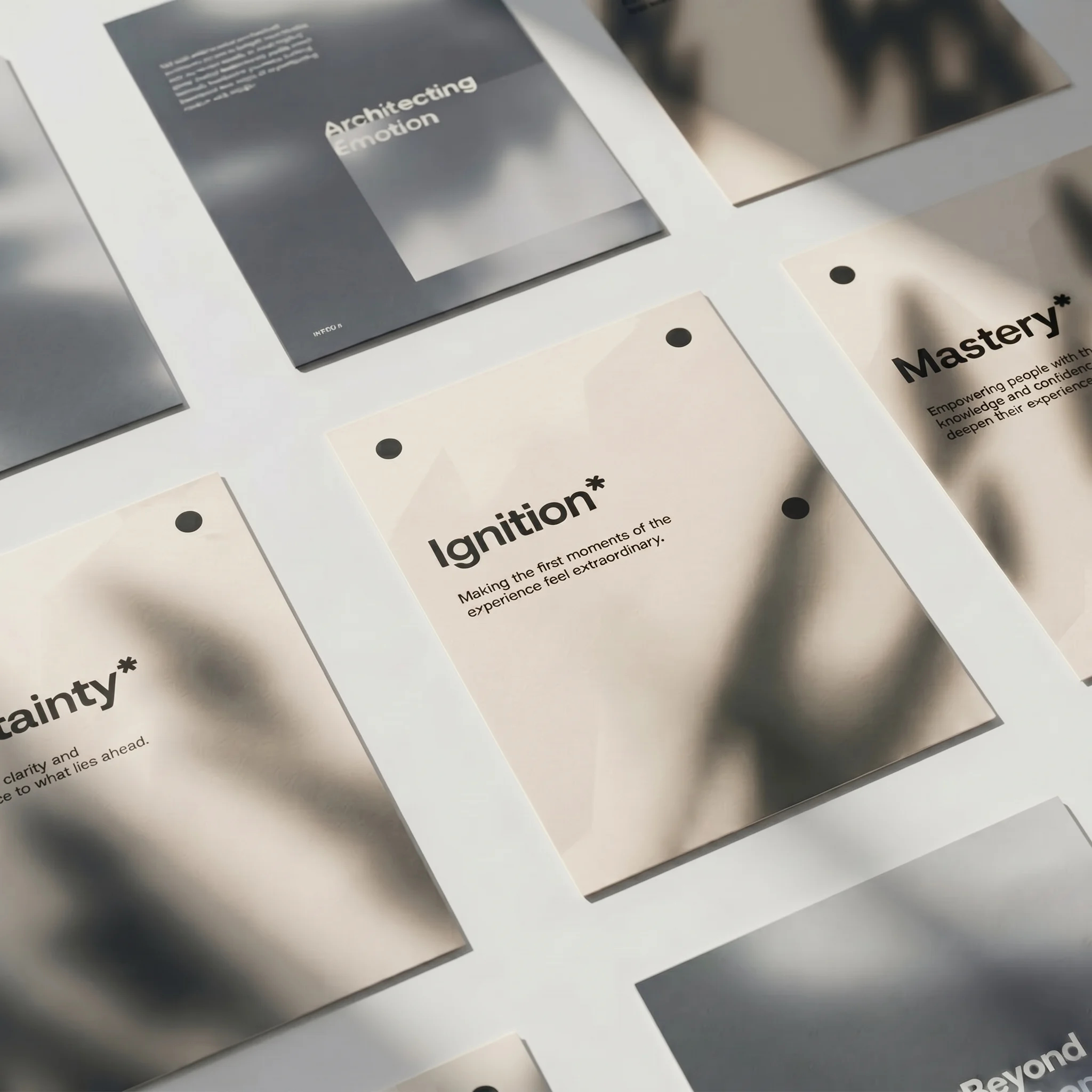
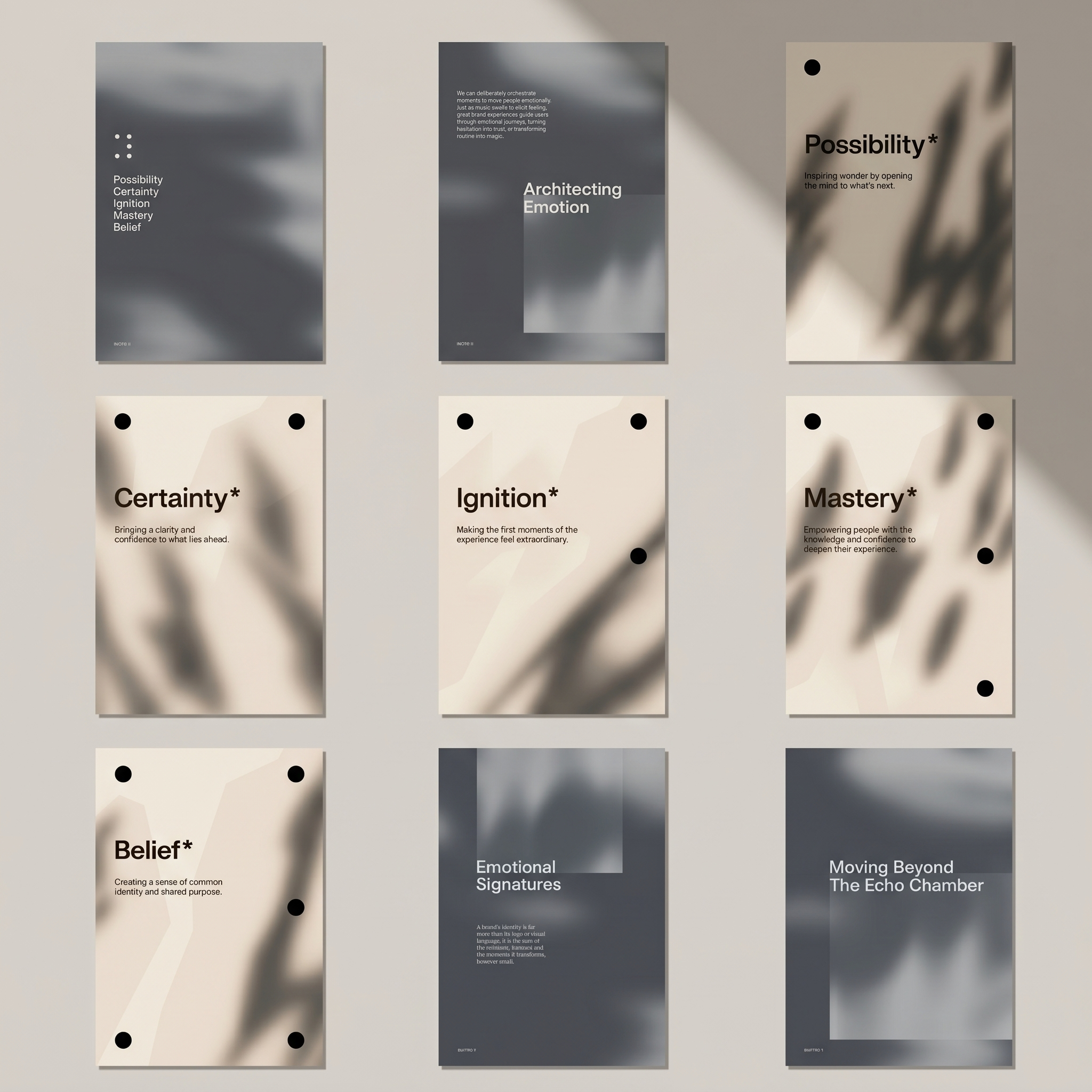
NewTerritory's proprietary framework, the Big Five, identifies five emotional ingredients found in the world's highest-performing brand experiences. The most memorable experiences aren't random, they share a common emotional architecture
The Big Five is made up of the following elements: Possibility: sparking curiosity before anything has happened, Certainty: the quiet trust that a brand can be relied upon, Ignition: the disproportionate power of first moments, Mastery: confidence meeting capability, so guests feel genuine agency, and Belief: a shared sense of what a brand stands for). Unlike a linear customer journey map, the Big Five focuses on the emotional states that actually drive loyalty and advocacy.
[Read the full framework: The Big Five - the framework behind world-class brand experience]
Why do hospitality brands need Signature Experiences now?
Because the market has never been more saturated, or more homogenous. "The market is so saturated," says Isabella. "Guests have more choice than ever, and a lot of hospitality brands are offering similar levels of comfort, design and convenience. So, the question becomes: what makes someone remember you?"
Aoife connects that saturation to a broader cultural shift, "the homogeneity of a globalised aesthetic." Social media, Pinterest and AI increasingly shape creative direction, she argues, producing "a sea of sameness" and a placeless visual language that didn't exist a decade ago. At the same time, guest expectations have risen precisely because we can now see the best experiences in the world at a glance, and feel the "Instagram v reality deflation" when the real thing falls short. Signature Experiences matter now, she says, because "they can orient us back toward the tangible, visceral details of a lived experience" - something "genuinely unrepeatable, because it could only have been created by that brand, in that place, in that way."
Crucially, neither treats this as a soft brand layer. "Memorable experiences shouldn't be seen as a 'nice to have'," Isabella says. "They have a direct commercial role", giving people a reason to return, recommend and spend more time with a brand, and giving teams something clearer to deliver against. Aoife frames the commercial unlock as coherence: brand narrative "is only ever understood through experience. It's lived, not read." When how a brand speaks about itself and how it's actually, emotionally experienced align, "a brand stops competing within a category and starts defining one."

What does the future of experience-led loyalty look like?
More personal and more emotionally intelligent, but not more complicated. Isabella sees a future that is "more personal, more emotionally intelligent, and more connected, but not necessarily more complicated." Technology will play a bigger role in understanding guests and removing friction, she says, but the best experiences will still feel deeply human: the aim is "to use data and technology quietly in the background, so the experience feels more seamless, thoughtful and personal."
Aoife pushes the horizon further, describing hospitality less as a destination than "a portal or jump-off point", the brand as curator, offering "a kind of insider knowledge or a finely curated lens with which you experience the rest of your trip." Get the balance right, she says, and a stay becomes something larger: not just a room for the night but "a spirit or attitude of exploration."
Which returns us to the memory gap we began with. Most experiences will always fade, that's the nature of memory. But the select few that endure aren't the ones that spent the most or promised the most. They're the ones that understood the guest, met them at a human level, and left behind a feeling worth returning for. As Isabella puts it: people go back to places "not because it is the best deal or the most functional place to stay, but because it makes us feel good."
NewTerritory is a hospitality brand experience studio designing customer experiences built around The Big Five framework - helping global brands move guests emotionally, not just functionally. If you're rethinking your hospitality customer experience strategy, get in touch.
Frequently asked questions
Why do guests forget most hospitality experiences? Most experiences satisfy function - a clean room, efficient check-in, good food - without engaging emotion. Because human memory is encoded emotionally, experiences that don't make a guest feel something are not retained. The details fade within days, leaving only a vague impression of "fine."
What makes a hospitality experience memorable? Emotion, specificity and a sense of being understood. Memorable experiences are usually the most intuitive ones - small, human gestures that respond to the guest's actual situation - rather than the most expensive or elaborate. Guests remember how a place made them feel long after they've forgotten its facilities.
What is a Signature Experience? A Signature Experience is a distinctive, ownable moment, behaviour or ritual that guests associate with one brand and no other. Where great service makes a guest feel cared for in the moment, a Signature Experience creates a lasting memory that builds loyalty and gives a brand something competitors cannot replicate.
What is NewTerritory's Big Five framework? The Big Five is NewTerritory's proprietary framework identifying five emotional ingredients behind world-class brand experiences: Possibility (sparking curiosity), Certainty (building trust), Ignition (the power of first moments), Mastery (confidence meeting capability) and Belief (a shared sense of meaning). It focuses on the emotional states that drive loyalty rather than mapping a linear customer journey.
Why do Signature Experiences matter more now than five years ago? The hospitality market has become saturated and visually homogenous, driven by social media and a globalised aesthetic. When comfort, design and convenience are table stakes, a Signature Experience is what makes a brand memorable and repeatable - something genuinely unrepeatable because only that brand, in that place, could have created it.
What is a hospitality brand experience studio? A hospitality brand experience studio designs the end-to-end emotional and sensory experience of a hospitality brand, from service rituals and spatial design to the signature moments guests remember, rather than only its visual identity. NewTerritory works with global hospitality brands to design experiences built around the Big Five framework.
EXPLORE MORE PROJECTS, NEWS & THINKING

.jpg)