Too short to fly, too long to drive

Designing rail experiences for the “Too Short to Fly, Too Long to Drive” North American market
For decades, rail operators competed on a familiar set of metrics: routes, price and punctuality. Success was operational. Differentiation was marginal and brand, where it existed, lived mostly in liveries and logos.
But that model is quietly becoming obsolete.
Today, rail is no longer just about getting from A to B. It is about how that journey feels, what it enables, and what it says about the operator behind it.
Rail is shifting from transport provider to experience host.
In this edition of our In Conversation series, NewTerritory’s Director of Client Partnerships, Nadja Orwell, speaks to journalist and transport communications expert, Liam O’Neill, to explore how the rail industry must adapt in a world of evolving customer expectations and why operators need to think and act more like hosts of experiences to succeed.

Liam O’Neill (LON): In the North American market, we are seeing rail compete with domestic air travel more than ever, why is this?
Nadja Orwell (NO): We’re seeing a fundamental shift in how people value time. It’s no longer just about speed, it’s about how that time is experienced.
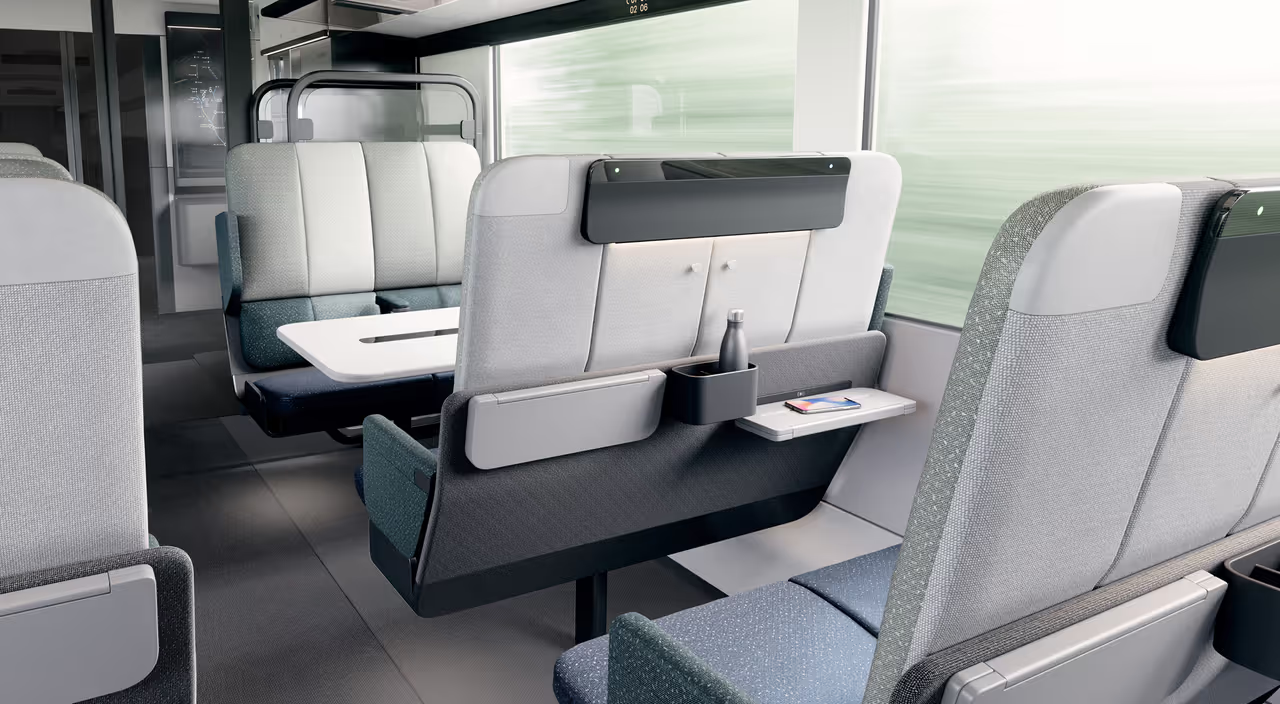
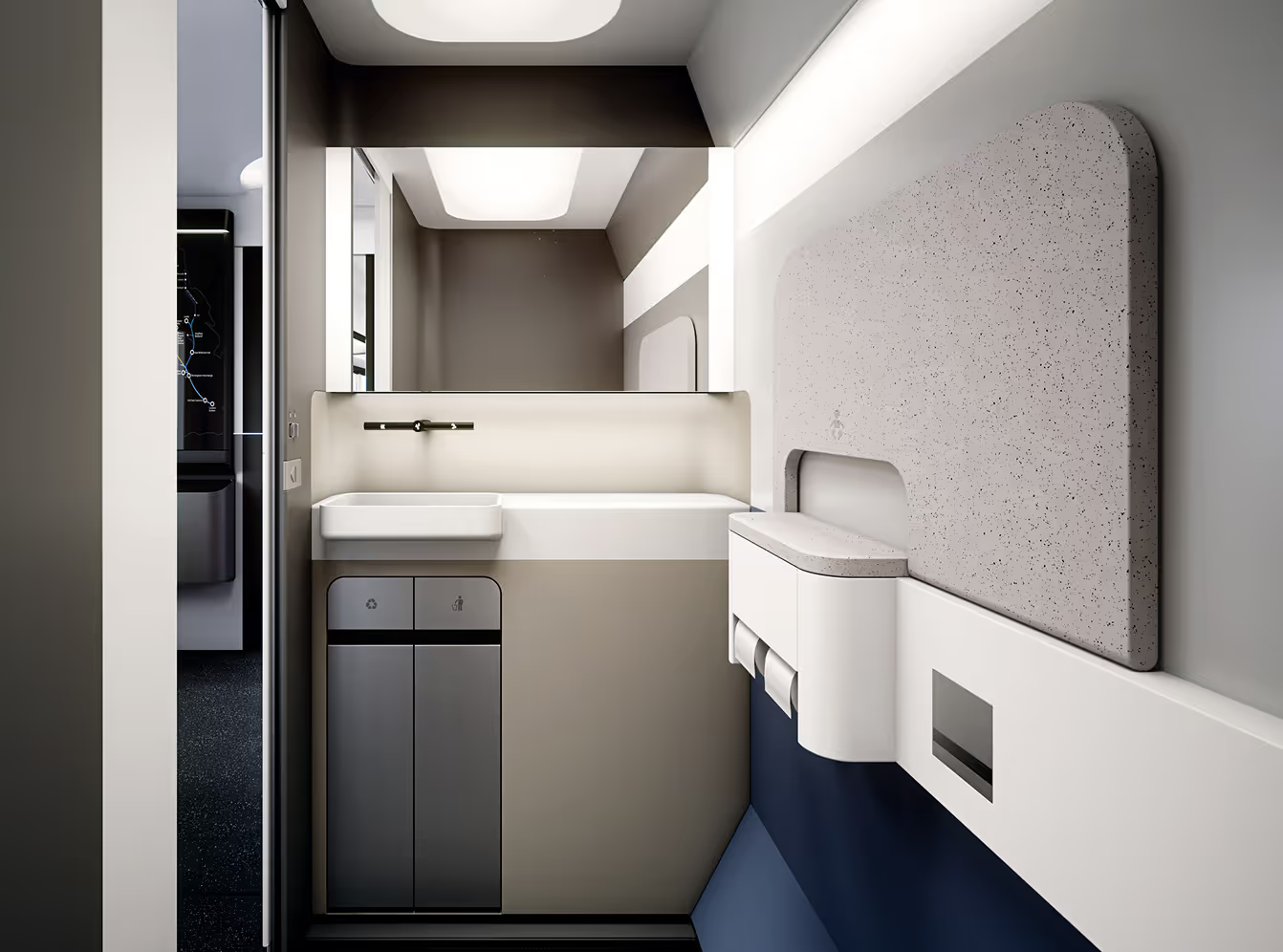
For journeys that sit in that middle ground, too short to justify the friction of air travel, yet too long to comfortably drive, rail becomes an incredibly compelling proposition. When we designed the cabins for HS2 in the UK, we explored how it could remove the hidden time costs: security, boarding, congestion, and replace them with something more continuous and human.
At the same time, expectations have been reset by airlines. Passengers now expect considered environments, clarity of service, and a sense of progression through a journey. Rail is beginning to meet that expectation, but with a key advantage: space, freedom of movement, and the ability to design a more fluid, less constrained experience.
That said, while the momentum is clear, rail still has a long way to go to consistently deliver on this potential across the network

LON: How can cabin design better support “deep work” or “deep rest” on journeys that are too short for sleep but too long to simply pass the time?
NO: The opportunity is to move beyond generic comfort and start designing for intent – we need designers to go a level deeper and start designing for how passengers intend to use the space – work, rest, relaxation on so on.
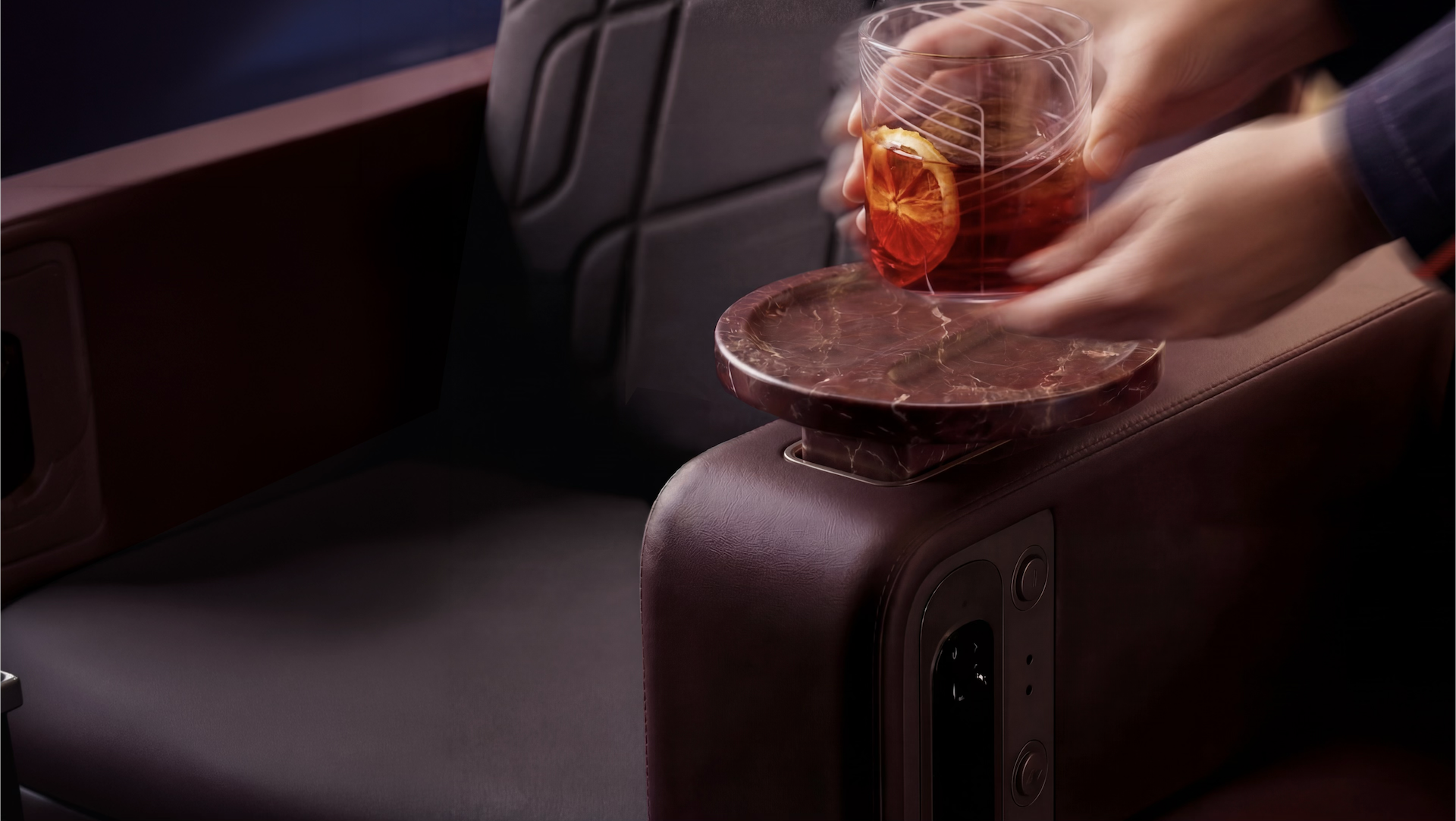
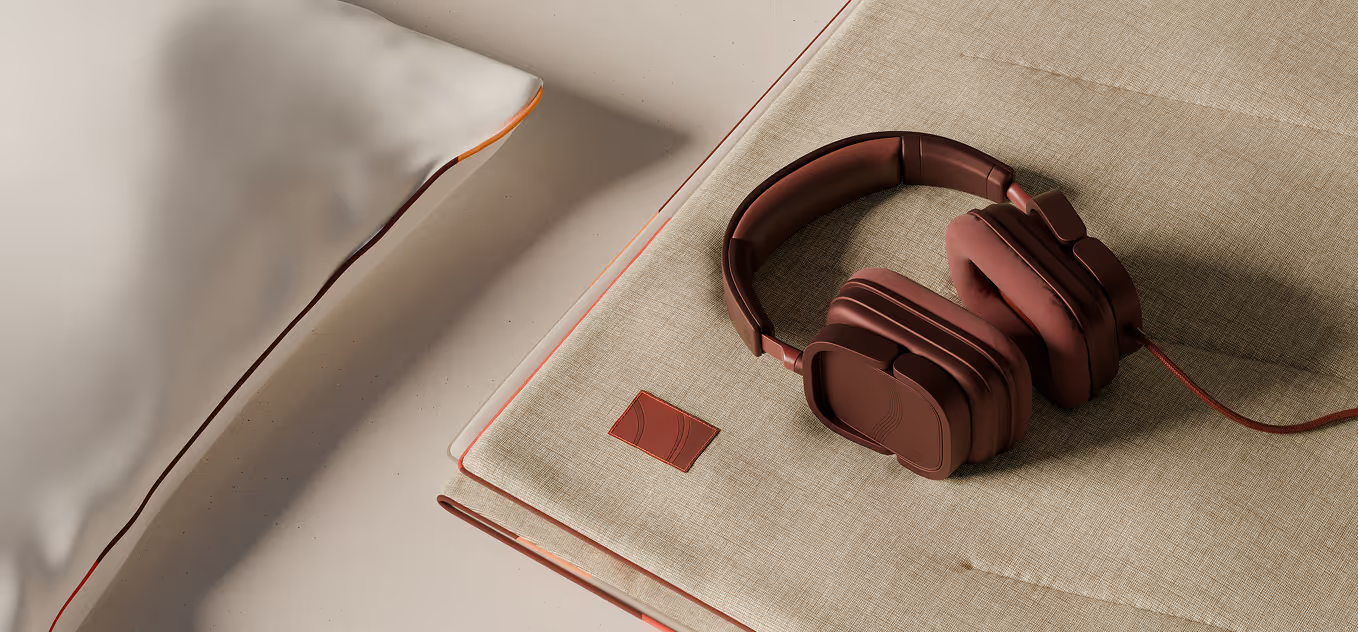
“Deep work” and “deep rest” are very different need states, but both require a level of environmental control that traditional rail cabins haven’t always prioritized. For work, that means stability, reliable connectivity, considered lighting, and surfaces that properly support devices without compromise. For rest, it’s about reducing cognitive load, softer lighting, acoustic dampening, and a sense of enclosure.
What’s important is that these aren’t treated as after thoughts, but as core experience principles that are designed in, rather than tacked on. Even small shifts, like posture support, visual privacy, or the ability to subtly personalize your space, can significantly change how that time is used.
The goal isn’t to force people into one mode or another, but to create an environment that naturally supports both, depending on what they need in that moment.
LON: That means a lot of different use cases for the same cabin, much like we see in aviation. How might rail environments evolve to support multiple states of use within a single journey?
NO: This is where rail has a real opportunity to lead innovation in the market.
Rather than designing a fixed environment, the future cabin needs to behave more like a responsive system. One that can flex between different modes of use without requiring physical transformation at every turn.
Some of that is spatial, subtle zoning, orientation of seating, or the way materials and lighting signal different behaviors. But a lot of it is behavioral. How the environment guides people through cues, rather than instructions.
We’ve seen in aviation that over-programming can create friction. In rail, there’s an opportunity to be lighter touch. To allow the same space to feel social at one moment, and more introspective the next, simply through shifts in atmosphere.
Designing for multiple states isn’t about adding more, it’s about enabling adaptability without complexity.
LON: As rail travel expands in North America, what will effective “tech enablement” look like for passengers, particularly in delivering reliable connectivity? Will this be similar to what we’ve seen in aviation?
NO: Connectivity has already moved from being a feature to an expectation, but the benchmark will be much higher than aviation.
Without the constraints of 35,000 feet, passengers don’t compare rail Wi-Fi to other trains, they compare it to their home, their office, and their mobile network. So, reliability, continuity, and ease of access is critical.
But effective tech enablement goes beyond bandwidth. It’s about how seamlessly it integrates into the journey. There’s also an opportunity for rail to think more holistically about digital and physical integration. Not just connectivity for its own sake, but how it enhances the overall experience, from journey updates to service interactions.
Where aviation has often had to retrofit technology into constrained environments, rail has the advantage of designing it in from the outset. That should lead to something far more intuitive and human centric.
LON: Often, many US passengers are used to the privacy of their own vehicles. What design approaches can help foster a sense of psychological privacy in shared, long-distance rail environments?
NO: Privacy in this context isn’t about isolation, it’s about choice and control.
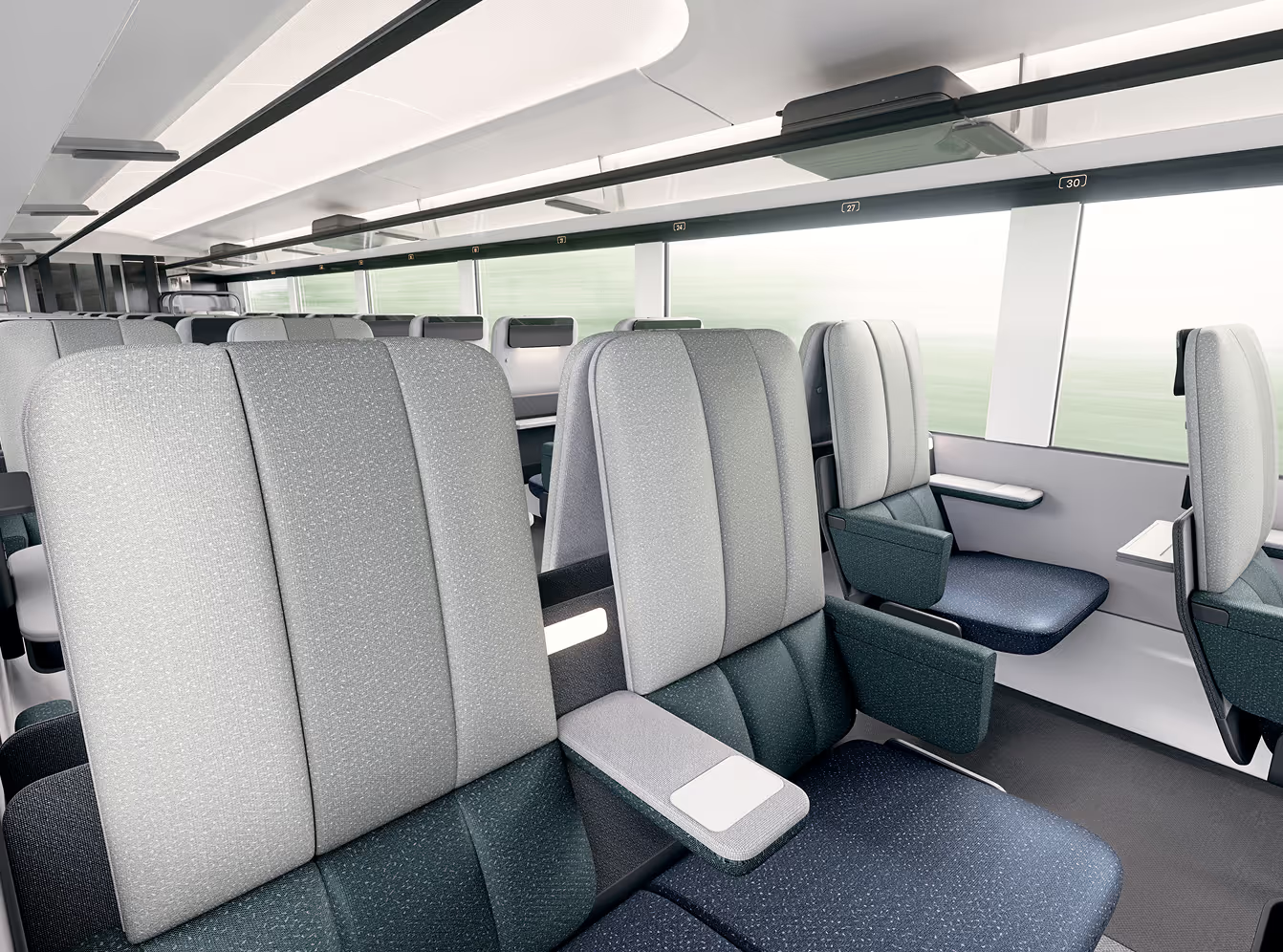
Passengers don’t necessarily need fully enclosed spaces, but they do need to feel a sense of ownership over their immediate environment. That can be achieved through relatively subtle design moves: seat orientation, layered boundaries, headrest wings, material changes, or lighting that defines personal space.
Acoustics also play a huge role. Reducing ambient noise and limiting the intrusion of others’ conversations can dramatically shift how exposed a space feels.
There’s also a behavioral layer. How people enter, move through, and occupy the space influences perceived privacy just as much as physical design.
The ambition should be to recreate the emotional comfort of being in your own space, without removing the shared nature of the journey. When done well, it doesn’t feel like a compromise, it feels like an upgrade.

LON: Stepping back from the detail, how would you describe the current state of rail in North America today, and what fundamental shift is needed to elevate the experience to meet what passengers now expect?
North American rail is at a really interesting inflection point. The ambition is growing quickly, but in many cases the experience still reflects a more operational mindset than an experiential one.
Historically, rail in North America has often been positioned around utility, moving people efficiently from A to B. But passenger expectations today are being shaped by entirely different interactions with brands. Hospitality, wellness, retail, even workplace design. People now expect environments that feel intuitive, emotionally considered, and reflective of how they actually want to spend their time. That creates a disconnect when the experience feels purely functional or inconsistent across the journey.
The fundamental shift is recognizing that rail is no longer simply a transport mode, it’s a competitive experience platform. That means designing holistically around the passenger, not just around operational requirements. Importantly, that doesn’t necessarily mean making everything more premium. It means being more intentional. Thinking about atmosphere, comfort, service, digital integration, and emotional experience as interconnected parts of the same system.
The operators that succeed will be the ones that stop asking, “How do we move passengers more efficiently?” and start asking, “How do we make this time genuinely valuable to people?” Because increasingly, that’s what passengers are choosing between.
For more in the In Conversation series, check out:
Reimagining the workplace through hospitality design
How electrification is transforming automotive branding
The future of car interior design part 1
The future of car interior design part 2
EXPLORE MORE PROJECTS, NEWS & THINKING

.jpg)